Most online shops show you a grid of products and hope for the best. Whaleworx is a Chicago shop of one-of-one art, oddities and painted toy soldiers, so a grid was never going to be enough. Every piece is one of a kind. When it’s gone, it’s gone.
It started as a distinctive store with an AI assistant and Square checkout. It is still very much one person’s shop. Charlie finds every piece around Chicago, photographs it on his phone and tells its story. What changed is the help: a few AI helpers now handle the chores he never had time for, like staging photos, tidying his notes, suggesting a price and answering shoppers at 11 PM. They suggest; he decides. Every lot goes up for auction on the shop’s own domain, and under the hood it is still WooCommerce, Square and a fast, locked-down Linux server that we manage.
A Shop That Feels Like a Place
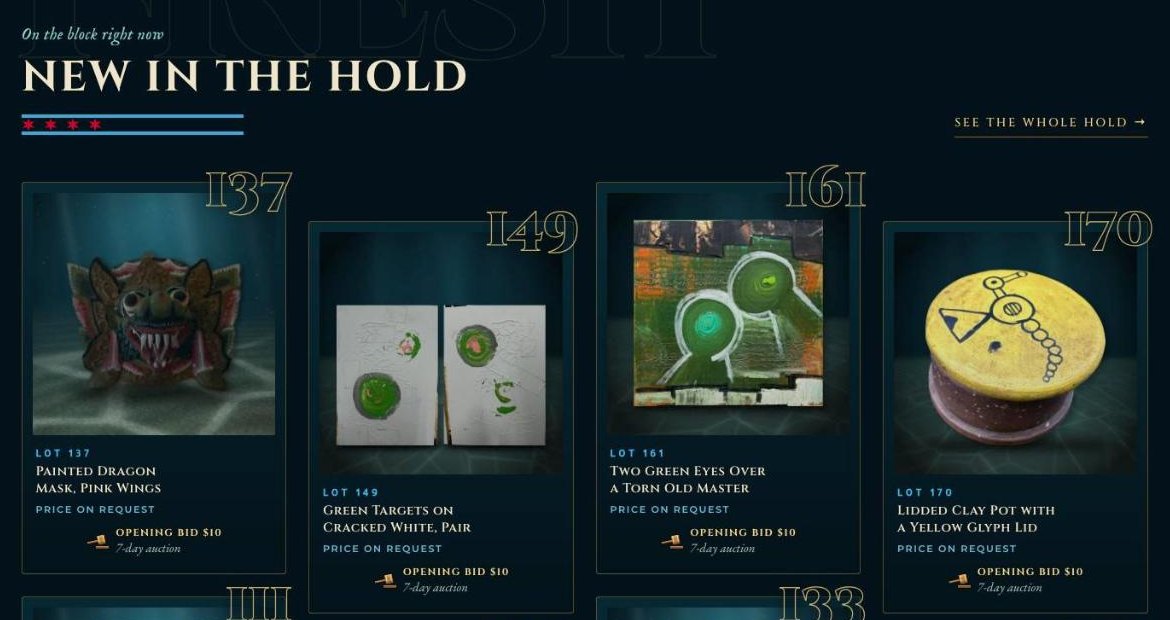
Whaleworx’s tagline is “Weird things for good folks,” and its logo comes from an old whale sign. We took the whale literally. The whole shop sits at the bottom of the Chicago River: a live, animated hero, a night skyline above the waterline, light moving across the riverbed. Every lot is shown on that same backdrop, so a framed print, a mid-century ball clock and a horn gramophone all look like they belong in one collection. Motion is used with restraint, and everything holds still for visitors who prefer reduced motion.
From Phone Photo to Auction Block
One-of-one stores live on photography, and nobody has time for a studio. At Whaleworx a piece goes from a phone on a kitchen table to a live auction in five steps, and the AI helpers handle their steps while Charlie is out hauling the next find.

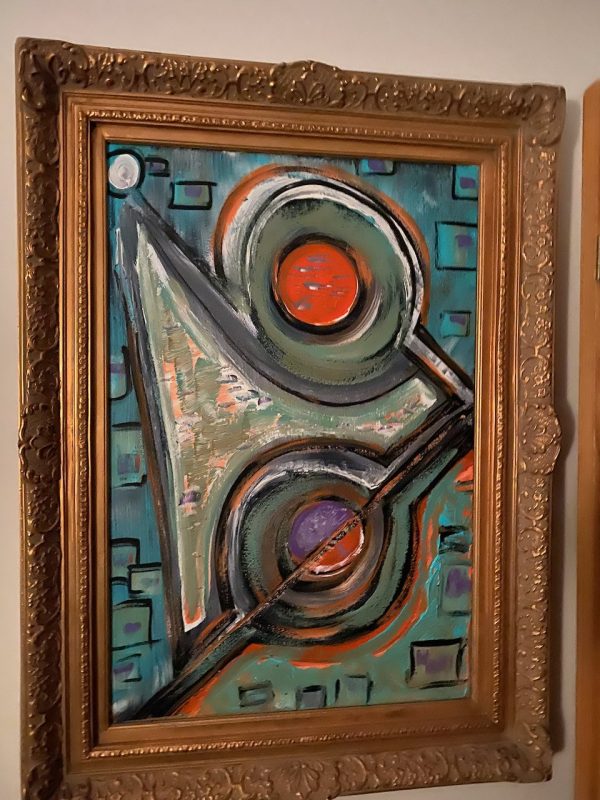

Lot 051, before and after. The original photo stays in the gallery so shoppers can see the real thing.
Meet the Help
Charlie runs Whaleworx. The AI helpers just work there, and they have very specific job descriptions. None of them gets a lunch break, none of them is allowed near the cash box, and every one of them answers to the Captain.
None of it is hard-coded. Each shop sets its own dials: the house voice, what the helpers are called, the market to price against, whether shoppers see estimates at all, and the auction rules. Charlie can hand-set or hide any estimate, any time. The Deckhand’s estimate is a second opinion, not a price tag.
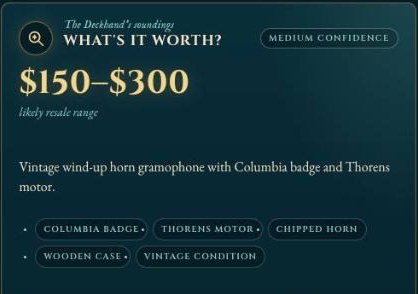
Lot 180, a horn gramophone. The Deckhand clocked the Columbia badge, the Thorens motor and the chipped horn. Charlie still sets the reserve.
Tell It Once: Product Stories by Voice
The best thing about a one-of-one piece is the story behind it, and owners hate typing it. So we built the Captain’s Log. Charlie walks through the catalog one product at a time, rings a brass bell on the screen and simply talks: where it came from, who made it, what he knows. The words are transcribed in seconds.
Then he chooses. Polish hands the words to the Scribbler, who tidies the ums and drafts the listing. Keep my exact words leaves the helpers out of it completely. Either way the maker, size and materials fill in, the piece is re-valued, and the story appears on the product page, signed, in his own voice. For a shopper deciding whether to trust a stranger’s shop, that first-person note does more than any badge.
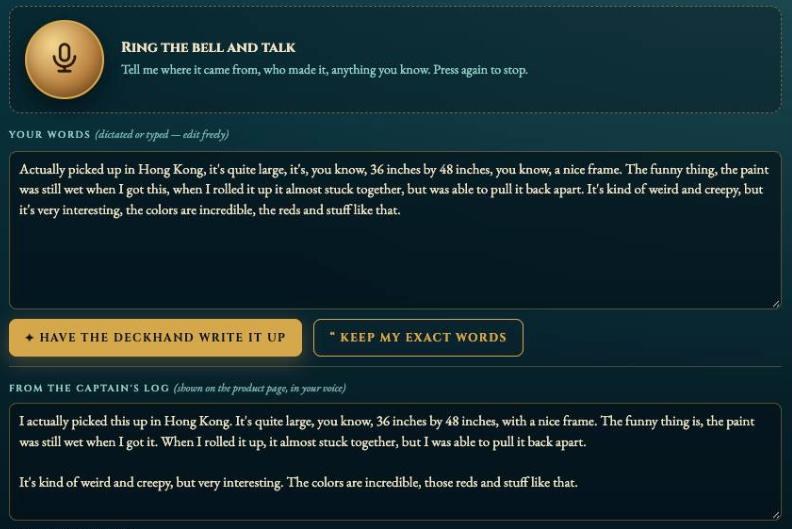
What he said into the bell
“Actually picked up in Hong Kong, it's quite large,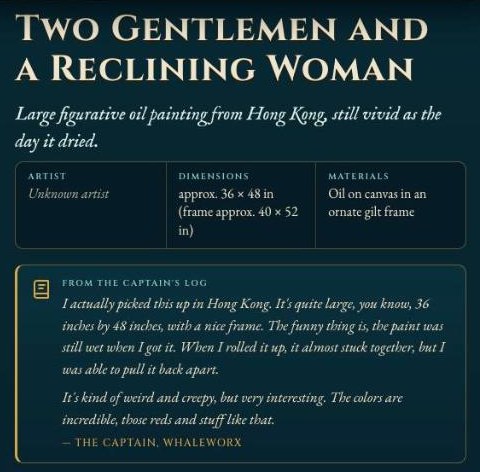
A real Whaleworx listing (Lot 054). Every story is signed and sits right under the product photos.
Live Auctions on the Shop’s Own Domain
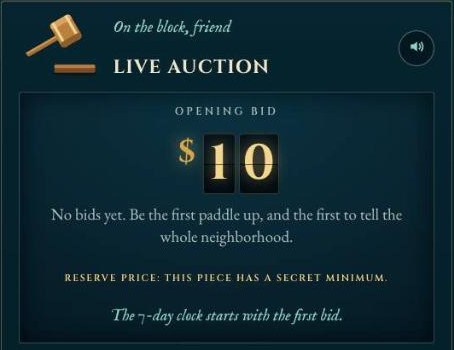
Every piece at Whaleworx is on the block. We built auction-house mechanics straight into WooCommerce, so bidding happens on the shop’s own site, with its own branding, and the customer list stays with the shop instead of a marketplace. A piece can also carry a Buy It Now price until the first bid lands.
- 🙈Proxy biddingBidders set a hidden max; the price only rises as far as it has to.
- ⏱️Soft closeA bid in the last five minutes resets the clock, so nobody gets sniped.
- 🔒Secret reservesA piece won’t sell below the owner’s minimum. Shoppers just see “Reserve met.”
- 🎛️Auction AdjusterA photo grid of every lot for setting opening bids, reserves and clock lengths in bulk.
- 💳Winner pay linksThe winner gets an email with a link to Square checkout. Pickup or quoted shipping.
One Engine, Any Personality
Whaleworx’s look is Moby-Dick by way of a Chicago loading dock. That is one theme, not the only one. The fonts, colors, layout and the voice the helpers write in all change per store, so a mid-century dealer, a cottage thrift shop or a record bin can each run on the same engine and still sound like themselves.
The same lamp, the same facts, five shops. The theme sets the look and the voice; it never changes the truth about the item.
Checkout Nobody Has to Learn
A distinctive store can’t make buying harder. Whaleworx keeps the buying steps familiar: a clear Add to Cart and Buy Now, a cart panel that slides in so shoppers never lose their place, and a sticky buy bar on phones. Payments run through the Square gateway, auction winners get a pay link by email, and shoppers can choose free local pickup at the Whaleworx loading dock in Chicago’s South Loop.
The Night Watch
Tap Ask the Deckhand in the corner and a shopper can ask about a piece, how the auctions work or how pickup works. The Deckhand pulls the night watch as our Xblu AI Website Assistant, trained on an approved knowledge profile written for this store. It describes lots using only what is on the item page, never reveals anyone’s bids, and sends anything it can’t answer to the shop instead of guessing.
Next Up: Selling for Others
Whaleworx has a Sell page for people who want the shop to sell their pieces. A seller adds photos, AI suggests a title and description from the first picture, and the seller sets an asking price. The shop keeps 15–20% when the piece sells, with nothing charged up front. Submissions open soon; until then the page shows how it will work.
From One Shop to an Engine

Whaleworx · Intelligent Commerce
Everything in this story now runs as an engine other shops can use: thrift and resale, vintage, estates, art, records, collectibles. Each store gets its own theme, its own voice and its own crew of AI helpers (name them whatever you like), set up in settings rather than code. The shopkeeper stays a person.What It Means for Your Store
- Personality sells. A store with a point of view gets remembered. A template gets compared on price.
- Hire AI helpers for the chores, not the soul. Staging, write-ups, price checks and catalog cleanup are where they save the most hours. The finding, the stories and the final say stay human.
- Keep the owner’s voice. A real person’s words, lightly tidied or left alone, build more trust than polished copy.
- Price what has no price. For vintage, art and resale, an AI estimate turns guesswork into a starting point you control.
- Auctions turn inventory into events. On your own domain, the excitement and the customer list both stay with you.
- Keep checkout boring and secure. Be as distinctive as you like above the cart.
See It Work
Visit Weird Whaleworx, bid on a lot or tap Ask the Deckhand. See the engine on whaleworx.com, then see how we work with stores like yours on the Retail & E-Commerce page.